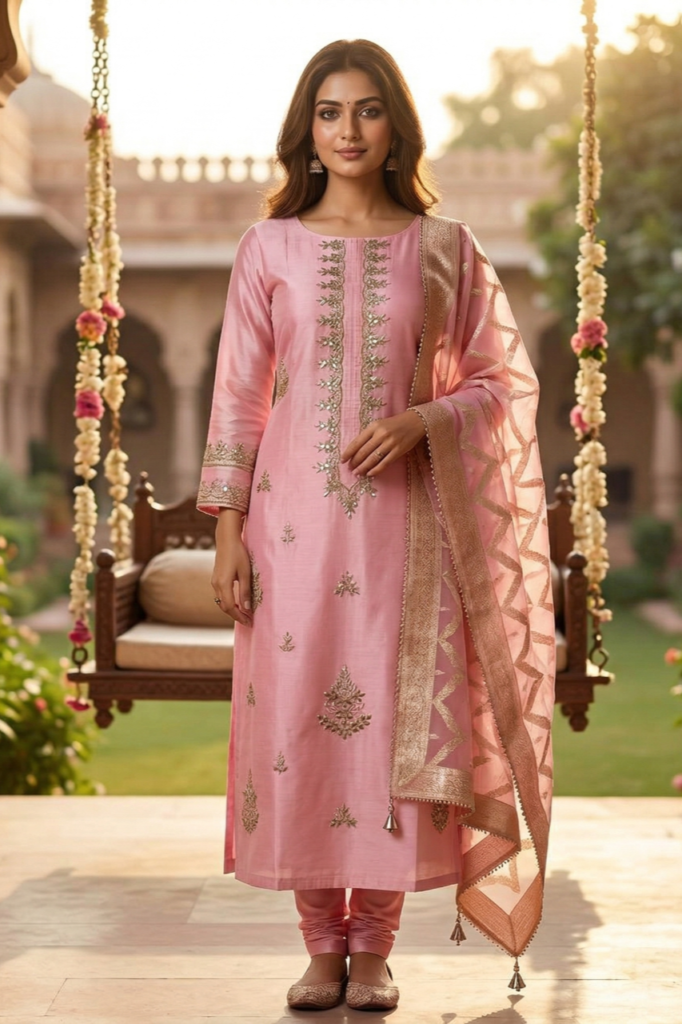
Wedding Guest Outfit Ideas: How to Style Suits for Every Function
Introduction
An Indian wedding is rarely one event. Between the mehendi, the haldi, the sangeet, the ceremony and the reception, a single invitation can mean several outfits, each with its own mood, setting and dress code.
A suit set is one of the most practical answers. It is comfortable enough for hours of sitting, dancing and greeting relatives, and it can be dressed up or down through fabric, embroidery and dupatta alone. Here is how to choose the right look for each function.
1. The Mehendi
The mehendi is usually a relaxed daytime gathering, often outdoors, so comfort and ease of movement come first. You will be sitting for long stretches and keeping your hands free while the mehendi dries.
Choose lightweight fabrics such as mul cotton or chanderi in fresh shades like green, lemon or soft pink. Phulkari and thread embroidery suit the cheerful mood well. Keep sleeves simple and easy to push back, and wear a dupatta that stays put without constant adjusting.
2. The Haldi
The haldi is the most informal function of all, and yellow is the traditional choice, though many families are happy with any bright, sunny shade. It is also the one event where your outfit may well get stained.
Save your finest pieces for later and reach for a soft cotton suit in yellow or mustard with minimal embroidery. A plain or lightly printed dupatta is ideal here, since delicate fabric and turmeric paste do not mix.
3. The Sangeet
The sangeet is about music, dancing and evening lights, so this is the moment for a little shimmer. Sequins, mirror work and metallic thread all catch the light beautifully after dark.
Organza and georgette work especially well because they move with you on the dance floor. Palazzo or sharara-style bottoms give you room to move, and it is worth securing your dupatta firmly at the shoulder, or draping it to one side, so it stays out of the way once the dancing begins.
4. The Wedding Ceremony
The ceremony is the most traditional occasion of the celebrations, so rich fabrics and classic craftsmanship feel right. Katan silk, tissue and zari-woven chanderi all carry the sense of occasion without needing heavy layering.
Deep jewel tones, mustard and warm pinks look wonderful in ceremony photographs. Many families prefer that guests leave the deepest bridal reds to the bride, so if you are unsure, a quick word with the hosts is always welcome. Ceremonies can run long, so choose a fit you can sit in comfortably.
5. The Reception
The reception tends to be more polished and contemporary, often held in a hotel or banquet hall. Think clean lines and considered detailing rather than the fullness of a traditional ceremony look.
Organza suits with fine floral embroidery, in shades such as navy, dusty blue or soft pastels, strike the right balance. A straight-cut kurta with a sheer embroidered dupatta looks elegant and modern, and pairs easily with heels and a small clutch.
Choosing Fabric by Season and Venue
The weather and setting should guide your fabric as much as the function does. For daytime and warmer months, breathable mul cotton, chanderi and kota doria keep you comfortable through long hours outdoors.
For winter weddings and evening events, richer fabrics such as katan, tissue and heavier organza hold their shape and feel more substantial. If a function is outdoors in the evening, plan for a shawl or a layered dupatta you are happy to be photographed in.
Plan Ahead If You Are Buying Unstitched
Wedding season is the busiest time of year for tailors, so this is the one detail worth planning early. If you are choosing an unstitched suit set, allow time for delivery, stitching and at least one fitting before you travel.
Stitching also gives you control over the finish. You can choose a neckline, sleeve length and bottom style to suit each function, which is the main advantage over buying ready-made in a hurry.
Accessories That Complete the Look
Let the outfit decide your jewellery. A heavily embroidered neckline needs only statement earrings, while a plain kurta leaves room for a necklace or layered bangles.
Comfortable footwear matters more than most guests expect, especially for functions on grass or long evenings on your feet. Block heels and embellished juttis are both practical choices that still look dressed up.
Conclusion
Dressing for a wedding becomes far simpler when you think function by function. Light cottons for the daytime rituals, shimmer for the sangeet, rich weaves for the ceremony and refined organza for the reception will carry you through the whole celebration.
Explore our festive suit collection to start planning your looks for the season, and remember to leave time for your tailor.