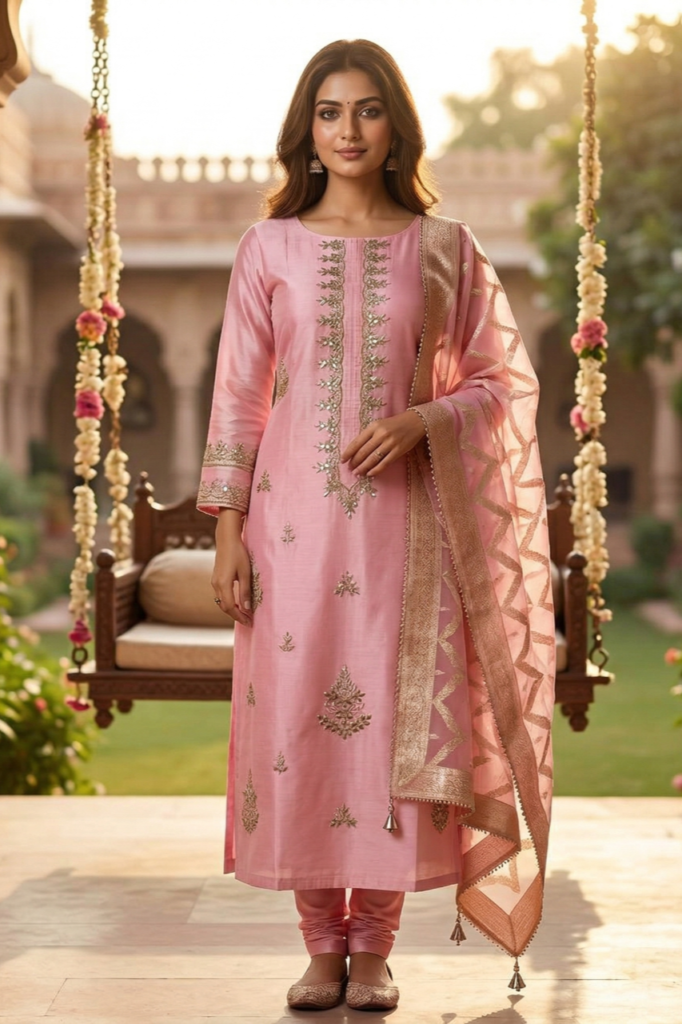
5 Dupatta Draping Styles to Elevate Your Ethnic Look
Introduction
The dupatta is often the most overlooked part of an ethnic outfit, yet it does more than any other piece to shape how the whole look feels. The same suit can read as relaxed daywear or polished festive wear depending entirely on how the dupatta is draped.
For unstitched suit sets this matters even more. You choose the fabric, the fall and the finish yourself, so learning a few reliable drapes gives you several different looks from a single set. Here are five draping styles worth mastering, and when to reach for each one.
1. The Classic Shoulder Drape
This is the everyday drape most women already know, and it remains the most versatile of them all. The dupatta sits along one shoulder with the remaining length falling freely down the back or across the arm.
It works because it keeps the kurta neckline and yoke embroidery fully visible, which matters when the front of the suit carries the detailing. Lightweight fabrics such as mul cotton and chanderi hold this drape comfortably through a long day, and a single pleat pinned at the shoulder stops it slipping.
2. The Front Pallu Drape
Here the dupatta is brought across the front in saree style, with the decorated end resting over one shoulder.
This drape is ideal when the dupatta itself is the most detailed part of the set. A heavy embroidered border, a zari weave or a scalloped edge deserves to be seen rather than hidden down the back. It makes a simple kurta look considered and dressed up, which suits festive lunches and family functions where you want elegance without heavy layering.
3. The Cape Drape
Spread evenly across both shoulders and left open at the front, the dupatta becomes something close to a cape.
It is the most structured of the five and suits sheer, crisp fabrics such as organza and georgette, which hold their shape and create soft volume. Because it frames the body symmetrically it photographs particularly well, making it a strong choice for weddings and evening celebrations. Keep jewellery minimal so the silhouette stays clean.
4. The Belted Drape
A more contemporary option: drape the dupatta over one shoulder, then secure it at the waist with a slim belt or a decorative kamarbandh.
This adds definition at the waist and holds the fabric firmly in place, which makes it genuinely practical for long events where constant readjusting becomes tiring. It pairs especially well with straight-cut kurtas and palazzo sets, and turns a familiar outfit into something noticeably modern.
5. The Stole Drape
The simplest of the five. The dupatta is folded lengthwise into a narrow band and placed over both shoulders like a stole.
It is understated and fuss-free, which makes it right for office wear, daytime gatherings and travel. Folding the fabric narrow also tames a large or heavily worked dupatta, letting you wear a festive set in a far more low-key way. Soft chanderi and mul cotton fall beautifully in this style.
Choosing the Right Dupatta Fabric for Each Drape
Fabric decides how a drape behaves. Sheer, crisp weaves such as organza hold structured shapes like the cape drape but resist tight pleating. Softer fabrics including mul cotton, chanderi and georgette fall close to the body, which suits the shoulder and stole drapes.
Heavily embroidered or zari-worked dupattas carry real weight, so they look best in drapes that let the fabric hang freely rather than being gathered. Matching the drape to the fabric is the difference between a look that sits well all day and one you find yourself adjusting constantly.
Styling Tips to Keep Your Drape in Place
Small details make a drape look intentional rather than accidental. Use fine safety pins or dupatta brooches at the shoulder instead of large clips, which pull at delicate fabric. Press the dupatta before wearing so the folds sit crisply, and always iron on low heat from the reverse side to protect the embroidery.
Keep accessories in proportion too. A heavily worked dupatta needs little more than simple earrings, while a plain one leaves room for statement jewellery.
Matching Your Drape to the Occasion
For daily wear and work, the stole drape and the classic shoulder drape offer comfort and easy movement. For festive gatherings, the front pallu drape highlights embroidery and adds richness without extra layers.
For weddings and evening events the cape drape creates presence, while the belted drape works well when you want a modern edge. Choosing your drape by occasion rather than habit is the quickest way to keep your styling feeling fresh.
Conclusion
A dupatta is the easiest way to change how an outfit feels without changing the outfit itself. With these five drapes, a single unstitched suit set can move comfortably between the office, a family function and a wedding.
Try them with the different fabrics already in your wardrobe and you will quickly find the two or three that suit your body, your comfort and your sense of style best.