Tailoring Tips for Unstitched Salwar Suits: Get the Perfect Fit
Unstitched salwar suits give you something ready-to-wear outfits often cannot: complete control over the final look and fit. Instead of adjusting yourself to a fixed size, you can decide the kurta length, sleeve style, neckline, trouser fit, and overall silhouette according to your body shape and personal style.
Whether you are buying an unstitched suit for everyday wear, office wear, a family gathering, or a special occasion, the right tailoring can transform beautiful fabric into an outfit that feels made especially for you.
Here are some simple tailoring tips to help you get the most out of your unstitched salwar suit.
1. Choose a Tailor You Can Trust
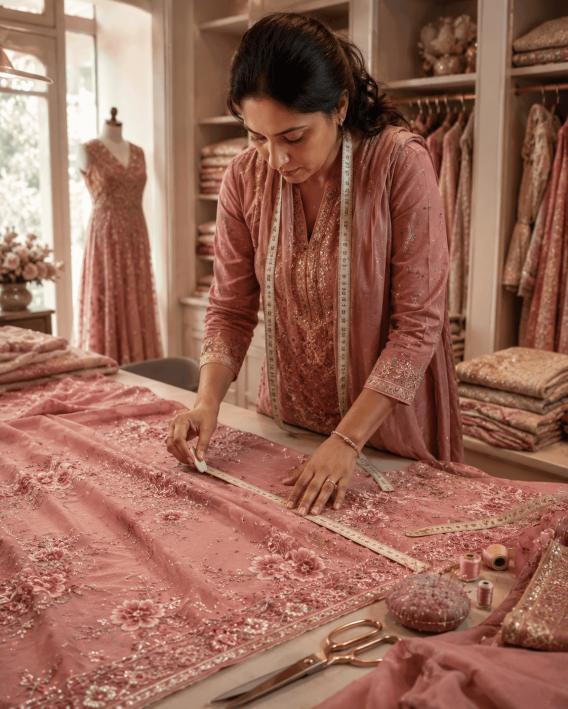
A good tailor can make a huge difference to the final appearance of an unstitched suit.
If you regularly wear salwar suits, try to build a relationship with one experienced tailor. Over time, they will become familiar with your measurements, preferred fits and styling choices.
When getting a new suit stitched, mention any fitting issues you have experienced before. For example:
- Sleeves that were too long
- A neckline that felt too high or low
- A kurta that was too loose around the waist
- Trouser length that did not work with your footwear
- Tightness around the arms or shoulders
Keeping a record of your preferred measurements can also make future tailoring much easier.
Tip: If you have a favourite suit that fits you perfectly, take it with you when visiting your tailor. It can work as a useful reference for proportions and measurements.
2. Decide the Look Before You Start Stitching
One of the biggest advantages of an unstitched suit is that you are not limited to the original silhouette of the fabric.
Before giving your suit to the tailor, decide what kind of look you want.
Do you prefer:
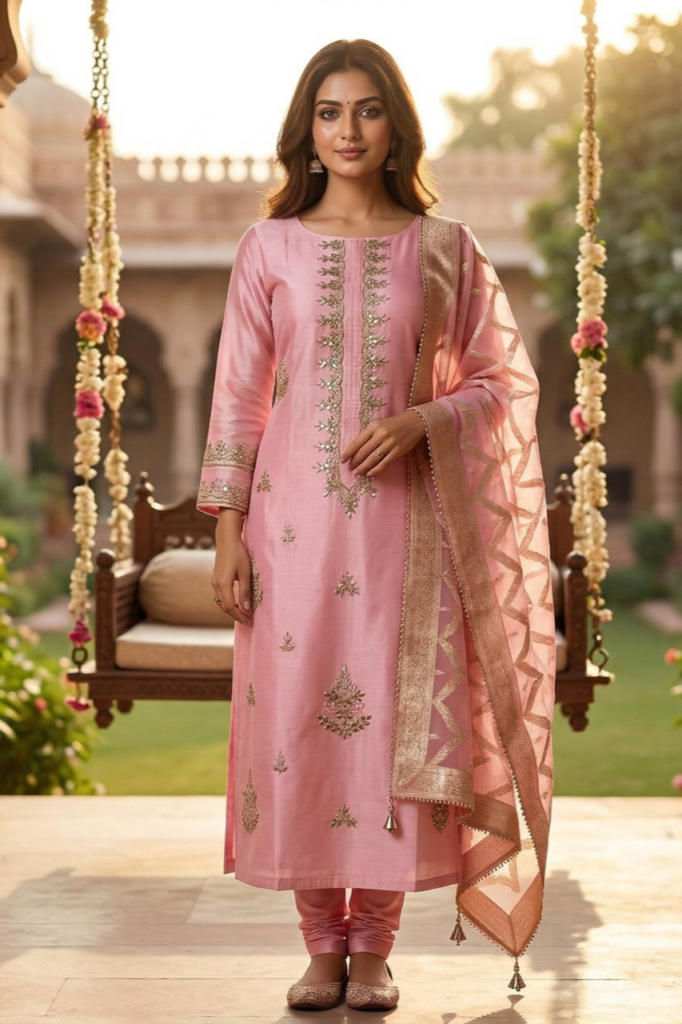
- A straight-cut kurta?
- A slightly flared kurta?
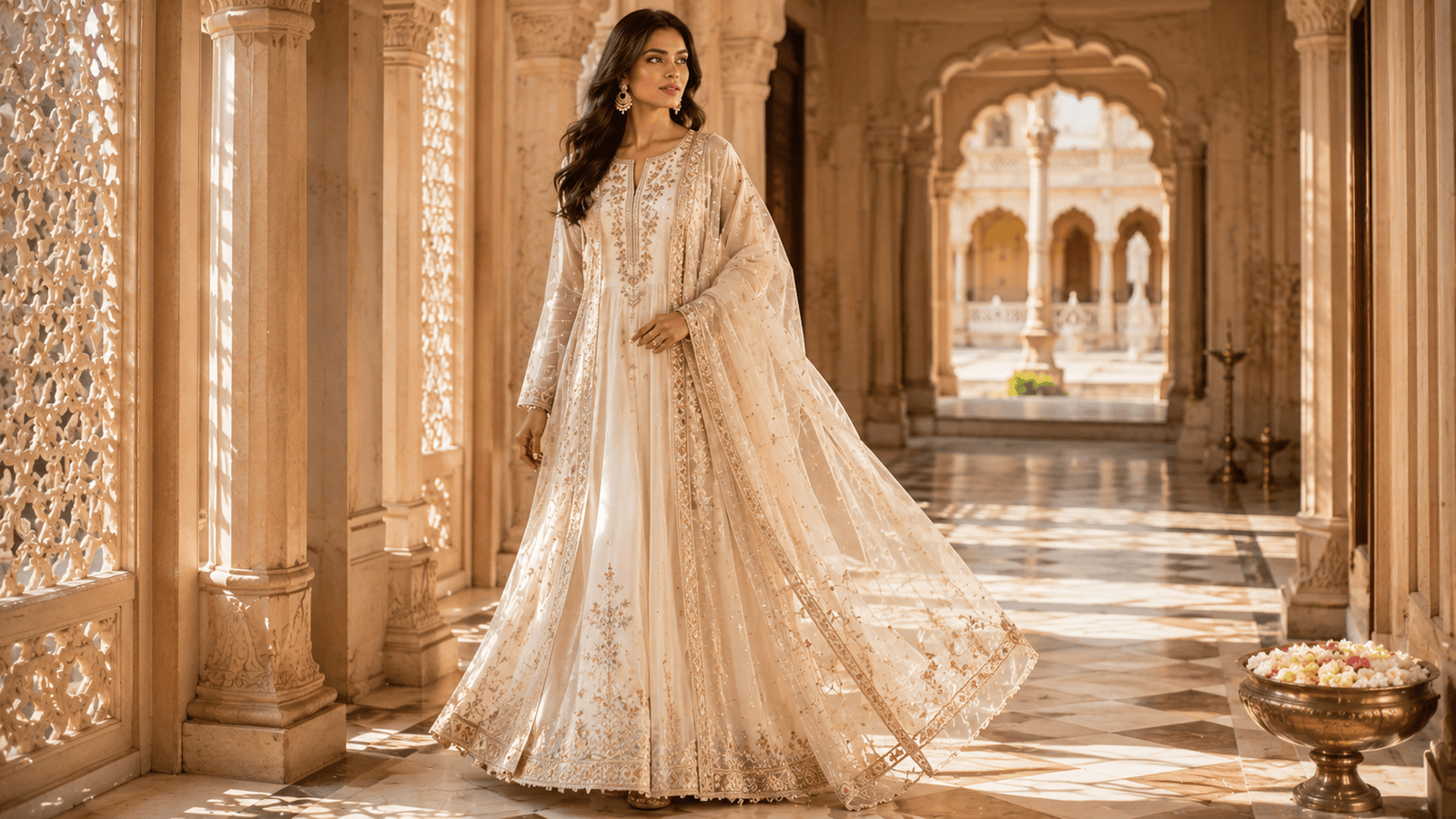
- A long Anarkali-inspired silhouette?
- Three-quarter or full sleeves?
- A round, V-shaped or boat neckline?
- Straight pants, cigarette pants or a more relaxed salwar?
A little planning before stitching can help you avoid expensive alterations later.
If you are looking for a particular style, save a reference photograph on your phone and show it to your tailor. A visual reference is often much easier to understand than trying to explain a particular neckline or sleeve style.
3. Get the Kurta Length Right
Kurta length can completely change the appearance of a salwar suit.
For a modern everyday look, you may prefer a shorter or medium-length kurta. For a more traditional or elegant appearance, a longer kurta can create a graceful silhouette.
Before stitching, decide exactly where you want the hemline to fall.
Consider:
- Your height
- Your body proportions
- The style of the suit
- Whether you will wear flats, sandals or heels
- Whether the suit is for everyday or occasion wear
If you frequently wear heels with your suits, tell your tailor before the trouser and kurta lengths are finalized.
4. Pay Attention to Trouser Length
Trouser length is another small detail that can make a surprisingly big difference.
If your pants are too long, they may bunch around your ankles. If they are too short, they can make the outfit look unbalanced.
When deciding the length, consider the footwear you normally wear with the suit.
For example, if you regularly wear heels, you may want slightly more length. If you mostly wear flats or sandals, a different trouser length may work better.
Also think about the style of trousers you want. Straight pants, cigarette pants, palazzos and salwars will all require different proportions.
5. Choose the Right Neckline
The neckline is one of the most noticeable parts of a kurta, so don’t leave this decision until the last minute.
Popular options include:
- Round neck
- V-neck
- Boat neck
- Square neck
- Keyhole neck
- Mandarin or collar-style necklines
You can choose a neckline based on your personal preference, the embroidery or print on the fabric, and the overall occasion.
If the front of the suit has heavy embroidery, a simple neckline can allow the detailing to remain the main focus. On a simpler fabric, an interesting neckline can add character.
Tip: Show your tailor a reference image before cutting the neckline. Once the fabric has been cut, changing the neckline significantly may not always be possible.
6. Don't Ignore Sleeve Length and Fit
Sleeves should be comfortable while still complementing the overall design.
Think about whether you prefer:
- Sleeveless
- Short sleeves
- Elbow-length sleeves
- Three-quarter sleeves
- Full sleeves
Also pay attention to the armhole and sleeve width. A sleeve that looks beautiful but feels restrictive can make the entire outfit uncomfortable.
Try moving your arms during the fitting. Raise your arms, sit down and move naturally. If the fabric feels tight around the shoulders or underarms, ask your tailor to make adjustments before the final stitching.
7. Always Try the Suit During the Fitting
Never be afraid to ask for a trial fitting.
A partially stitched suit is much easier to adjust than a completely finished garment. During the fitting, check:
- Shoulder fit
- Armhole comfort
- Bust and waist fit
- Kurta length
- Sleeve length
- Side seams
- Trouser waist
- Trouser length
- Overall comfort
Move around naturally rather than simply standing in front of the mirror.
Sit down, raise your arms and walk a few steps. These simple movements can reveal fitting problems that may not be noticeable while standing still.
10. Keep Your Measurements for Future Suits
Once you have found a fit you love, keep a record of the measurements.
You can note down:
- Kurta length
- Shoulder width
- Sleeve length
- Bust measurement
- Waist measurement
- Hip measurement
- Armhole
- Trouser length
- Trouser waist
- Preferred neckline
You can even keep measurements for different styles if you wear both relaxed and fitted silhouettes.
This makes your next unstitched suit much easier to get stitched exactly the way you like.
Why Unstitched Suits Are Worth the Extra Effort
The beauty of an unstitched suit is the freedom it gives you.
A ready-made outfit comes with a predetermined size and silhouette. With an unstitched suit, you have much more control over how the final outfit looks and feels.
You can adapt the garment to your measurements, experiment with different silhouettes and add details that reflect your personal style.
That flexibility is especially valuable when you want something that feels more personal than a standard ready-to-wear outfit.
Final Thoughts
Getting an unstitched salwar suit tailored does not have to be complicated. The key is to plan your desired look before the fabric is cut, work with a tailor you trust and always check the fit before final stitching.
Pay attention to the small details — neckline, sleeves, kurta length, trouser length and overall comfort. These details can turn a beautiful piece of fabric into an outfit that feels truly made for you.
At House of Ethniq, we believe that traditional Indian clothing should leave room for personal expression. An unstitched suit gives you that freedom — from choosing the silhouette to adding the finishing touches.
So the next time you choose an unstitched suit, don’t think of the tailoring process as an extra step. Think of it as the opportunity to create an outfit that is uniquely yours.
Frequently Asked Questions
1. What is the advantage of buying an unstitched salwar suit?
An unstitched suit gives you greater control over the final fit, length, neckline, sleeves and overall design compared with a standard ready-made outfit.
2. How do I choose the right tailor for an unstitched suit?
Look for a tailor experienced in Indian ethnic wear and preferably someone who understands the type of silhouettes you like. Keeping the same tailor can also make future fittings easier.
3. Should I try on an unstitched suit before final stitching?
Yes. A trial fitting allows you to identify problems with the shoulders, sleeves, armholes, waist, length and overall comfort before the garment is completely finished.
4. Can an unstitched straight suit be made into an Anarkali?
Depending on the amount and width of fabric available, a tailor may be able to create a more flared or Anarkali-inspired silhouette. Always discuss the design before cutting the fabric.
5. How should I decide the trouser length?
Consider your height, the style of trousers and the footwear you normally wear. Tell your tailor whether you usually wear flats, sandals or heels.
6. Can I customize the neckline of an unstitched suit?
Yes. You can discuss different neckline shapes with your tailor, but it is best to finalize the design before the fabric is cut.
Create Your Perfect Fit
Explore the unstitched suit collection at House of Ethniq and choose a fabric that you can tailor to your own style, measurements and occasion.