HOW TO CHOOSE THE RIGHT FABRIC FOR YOUR UNSTITCHED SUIT
When you buy an unstitched suit, the fabric decides almost everything that follows. It shapes how the outfit drapes, how comfortable it feels through a long day, how well it holds embroidery, and how many years it survives in your wardrobe.
Two suits can carry the same print and the same colour, yet feel completely different simply because one is mul cotton and the other is chanderi silk.
This guide walks you through the fabrics we work with most often at House of Ethniq, what each one is genuinely best suited for, and how to match fabric to season, occasion and climate before you hand anything to your tailor.
WHY FABRIC MATTERS MORE THAN THE PRINT
It is easy to fall for a print or a colour first. But the fabric underneath is what your tailor actually works with, and what sits against your skin all day.
Fabric determines:
- How the kurta falls, whether crisp and structured or soft and flowing
- How breathable the suit feels in heat, humidity or winter
- How well the surface holds embroidery, zari or chikankari
- How much care and maintenance it needs after each wear
- How gracefully the suit ages over years of washing
Choosing well at this stage saves real disappointment later. No amount of skilled tailoring can make a heavy synthetic feel breathable in June.
COTTON: THE EVERYDAY FAVOURITE
Cotton is the most versatile fabric in Indian ethnic wear, and the one we stock most widely. It breathes, absorbs moisture, softens with every wash, and handles Indian summers better than almost anything else.
It also takes both print and embroidery beautifully, which is why cotton suits stretch all the way from simple daily wear to elaborately detailed sets.
Best for: daily wear, office, college, summer and humid climates
Keep in mind: cotton creases easily and can shrink slightly on its first wash
Tip: Ask your tailor to pre-wash cotton before stitching. It prevents an unpleasant surprise in fit after the first laundry.
Browse our cotton unstitched suit sets.
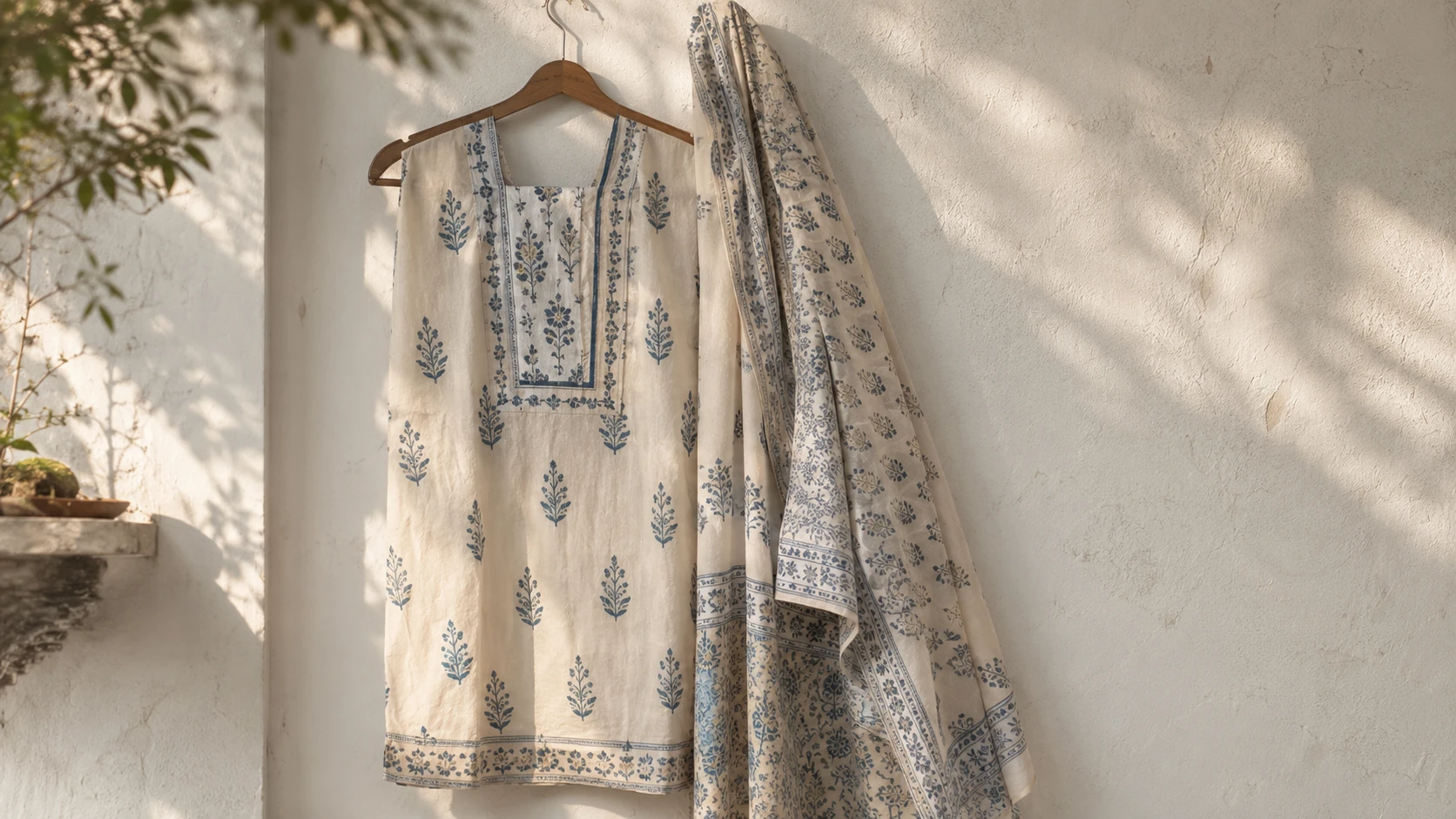
MUL COTTON AND KOTA DORIA: LIGHT ENOUGH FOR PEAK SUMMER
When ordinary cotton still feels like too much, these two are the answer.
Mul cotton (or mulmul) is a finer, softer, lighter weave with a gentle transparency. It is the fabric people reach for in May and June, and it becomes softer with every single wash.
Kota Doria, woven in Rajasthan, has a distinctive square-check texture created by alternating cotton and silk threads. It is feather-light, subtly textured and quietly elegant.
Best for: peak summer, daytime events, hot and humid cities
Keep in mind: both are sheer, so plan a good lining with your tailor
Explore mulmul suit sets and Kota Doria.
CHANDERI: WHERE COTTON MEETS SILK
Chanderi is the fabric to reach for when cotton feels too casual and silk feels like too much.
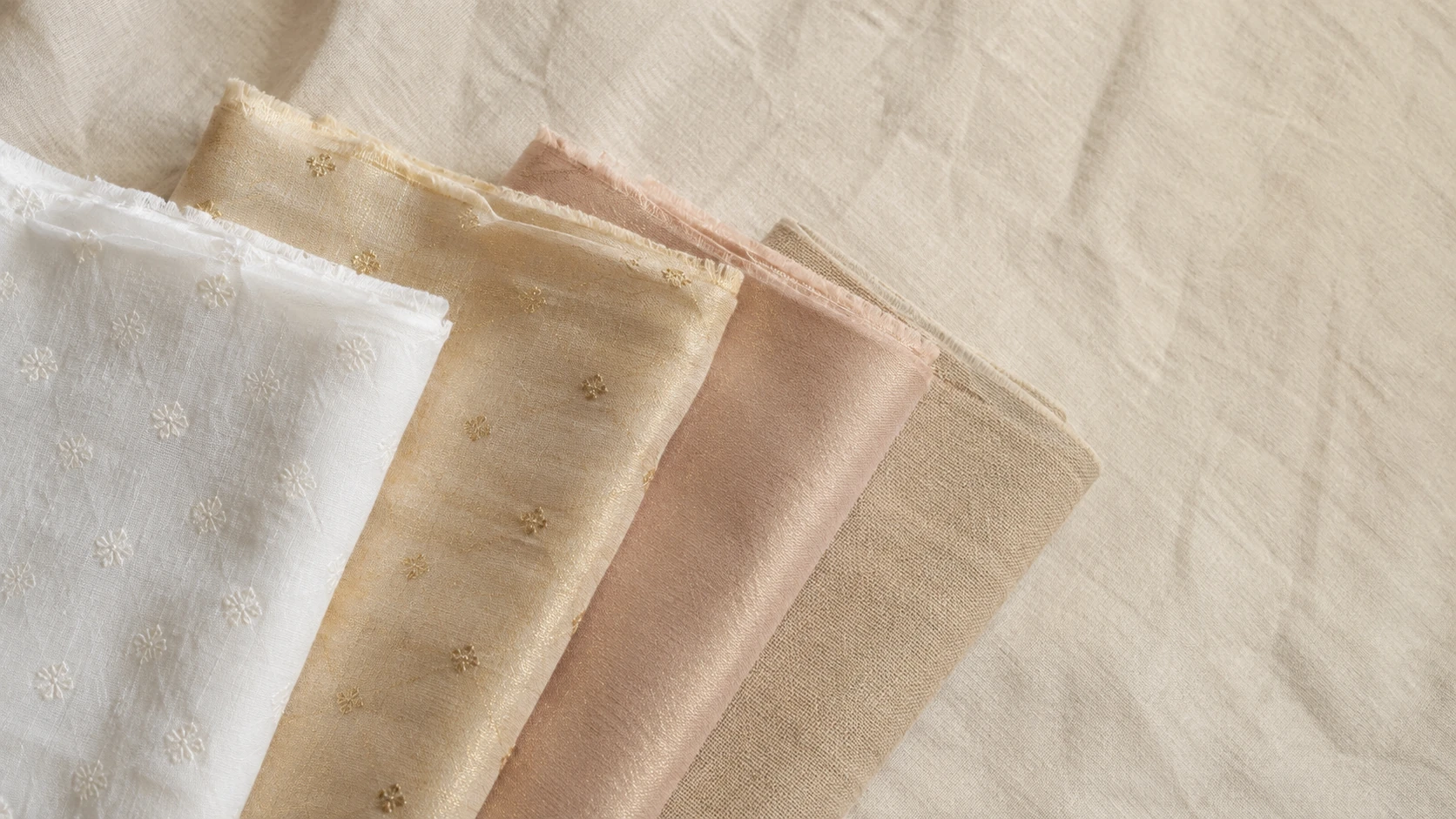
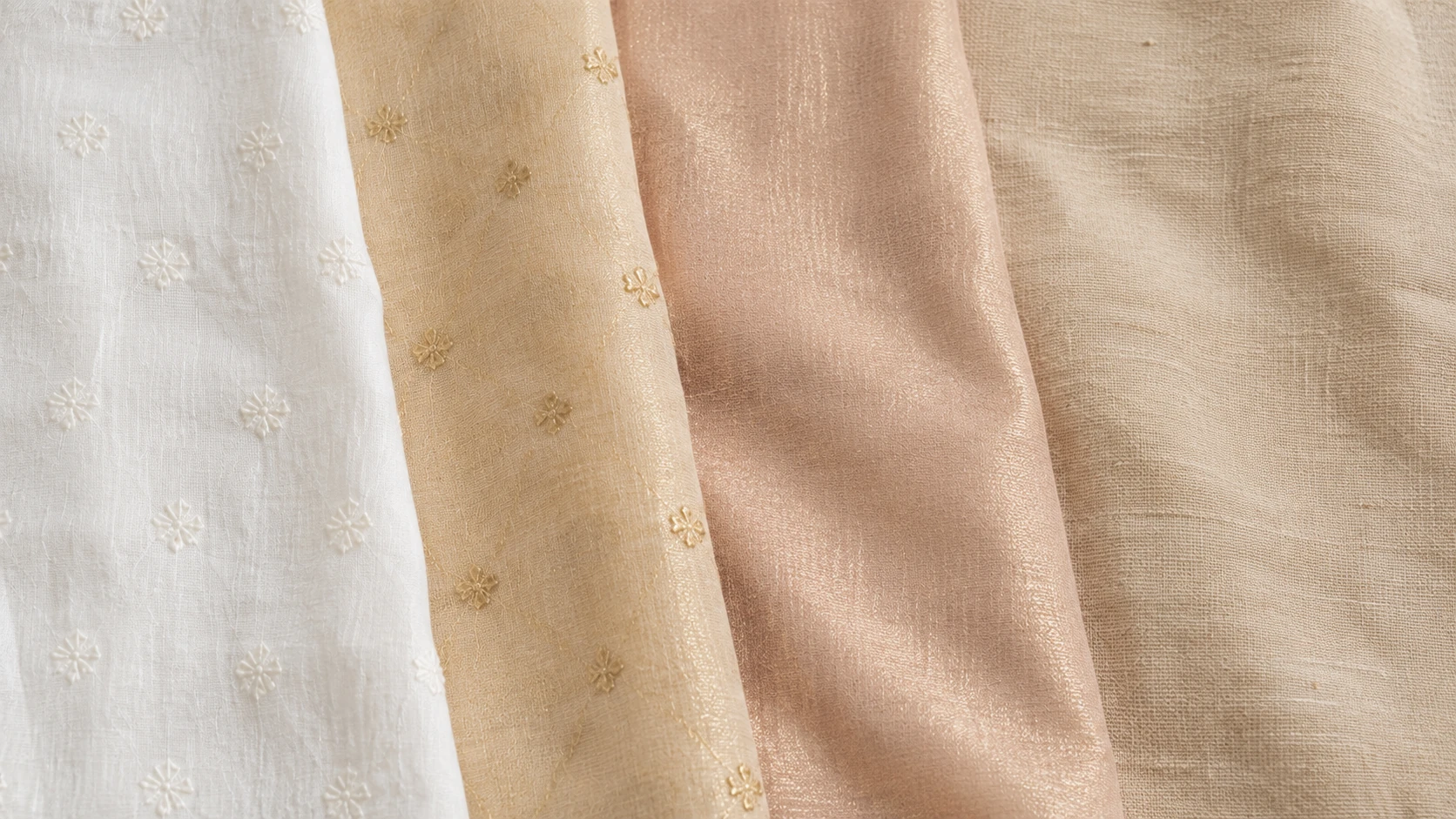
Woven in Madhya Pradesh, it carries a soft natural sheen, a light weight and a faint transparency that gives it a distinctive glow. It holds zari booti and delicate embroidery exceptionally well, which is why so much of our signature work is built on it.
Best for: festive daywear, office celebrations, weddings, gifting
Keep in mind: chanderi is delicate and prefers dry cleaning
See our chanderi suit sets.
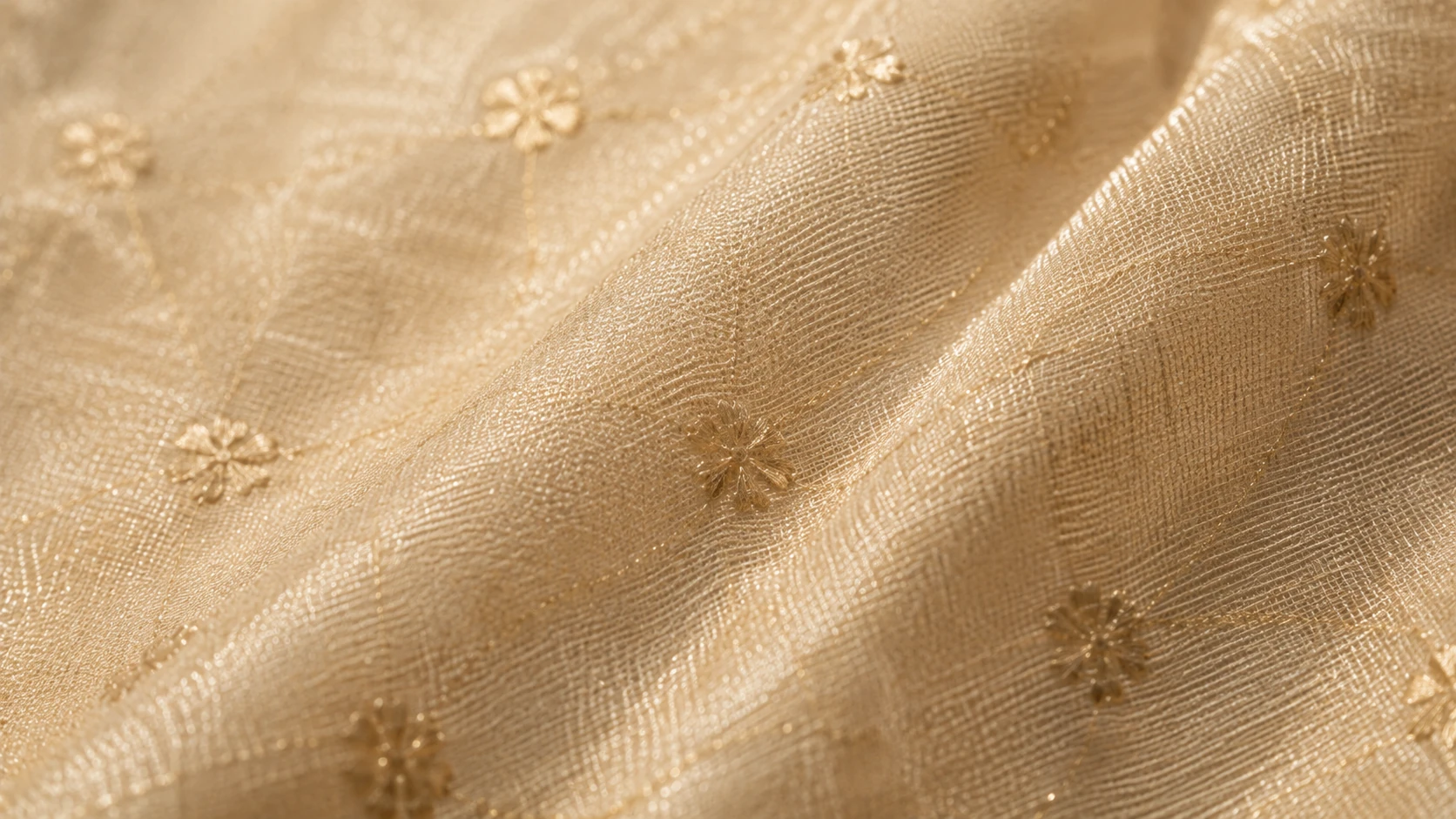
SILK: TIMELESS FESTIVE LUXURY
Silk remains the default choice for weddings and major festivals, and for good reason. It carries colour with a depth that no other fabric quite matches, drapes with weight and holds heavy embroidery without collapsing.
Silk also keeps you comfortably warm, which makes it a natural winter and evening fabric.
Best for: weddings, receptions, festivals, winter evenings
Keep in mind: dry clean only, and store away from direct sunlight
Browse silk suit sets and our Banarasi weaves.
TISSUE AND ORGANZA: SHEER FESTIVE DRAMA
These are the fabrics that photograph beautifully and move even better.
Tissue carries a fine metallic shimmer woven right into the cloth, giving a glow that does not depend on heavy embroidery.
Organza is crisp, sheer and structured, and holds its shape rather than falling flat. It is the reason organza dupattas frame the shoulders so well.
Best for: festive occasions, sangeet, receptions, statement dupattas
Keep in mind: both snag easily, so keep them away from jewellery with sharp settings
Explore tissue suit sets and organza.
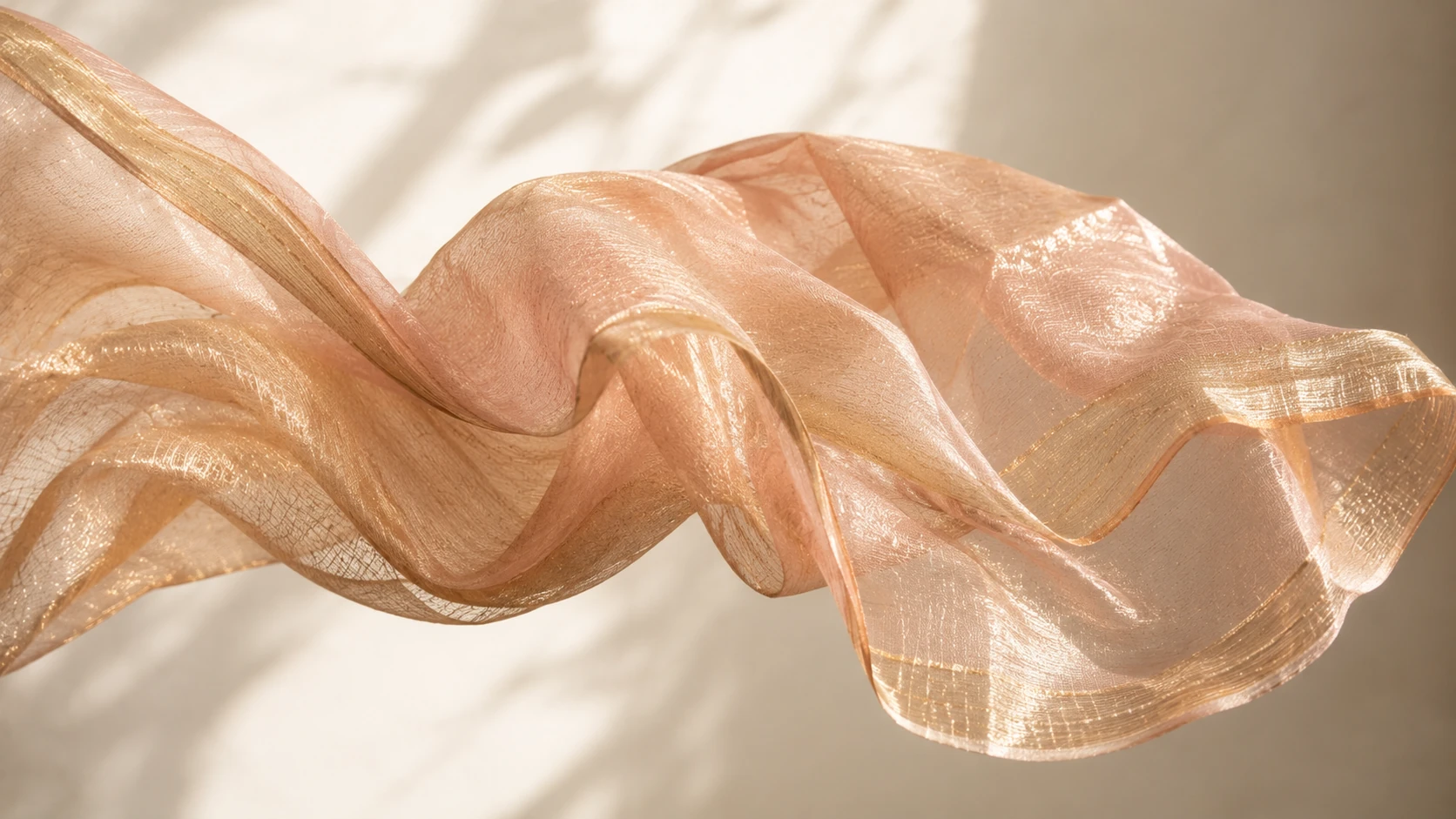
GEORGETTE, CHIFFON AND CREPE: FLUID AND FORGIVING
If you want a suit that moves with you and skims rather than clings, this is the family to look at.
Georgette has a slightly grainy texture and a lovely flow, and it resists creasing better than most. Chiffon is lighter and more sheer, ideal for dupattas that need to float. Crepe has a soft matte finish and falls close to the body without adding bulk.
All three are forgiving on the body, which makes them a reliable choice when you want comfort and elegance at once.
Best for: evening events, travel, occasions where creasing is a worry
Keep in mind: these are slippery to stitch, so an experienced tailor matters here
Browse georgette, chiffon and crepe suit sets.
LINEN: CRISP, STRUCTURED AND BREATHABLE
Linen holds a clean, tailored line in a way softer fabrics simply cannot. It is highly breathable, gets more comfortable with age, and carries an understated, contemporary character that works particularly well for workwear.
Best for: office wear, summer, structured straight-cut kurtas
Keep in mind: linen creases readily, and that soft rumpled look is part of its charm
See our linen unstitched suit sets.
CHIKANKARI AND PHULKARI: CRAFT, NOT FABRIC
These two names come up constantly in ethnic wear, and it helps to know they describe embroidery traditions rather than fabrics.
Chikankari is the fine white shadow-work embroidery of Lucknow, usually worked onto mul cotton, georgette or chanderi. Phulkari is the bright, dense floral thread work of Punjab, traditionally on cotton.
So when you choose a chikankari suit, you are still choosing a base fabric underneath, and everything in this guide still applies.
Explore chikankari and phulkari suit sets.
A QUICK SEASON-BY-SEASON GUIDE
| Season | Best fabrics | Why |
|---|---|---|
| Peak summer | Mul cotton, Kota Doria, cotton | Maximum breathability and moisture absorption |
| Monsoon | Georgette, crepe, linen | Dry quickly and resist creasing in humidity |
| Autumn and festive | Chanderi, tissue, organza | Festive sheen without winter weight |
| Winter | Silk, Banarasi, heavier chanderi | Naturally warm with a richer drape |
MATCHING FABRIC TO THE OCCASION
| Occasion | Go with |
|---|---|
| Daily and college wear | Cotton, mul cotton |
| Office and workwear | Linen, cotton, crepe |
| Family gatherings | Chanderi, chikankari, georgette |
| Weddings and receptions | Silk, Banarasi, tissue |
| Sangeet and mehndi | Organza, tissue, georgette |
| Travel | Crepe, georgette |
CARING FOR EACH FABRIC
A little care at the start adds years to a suit.
- Cotton and mul: machine wash cold, wash separately for the first two or three washes, and dry in shade to protect the colour
- Chanderi and silk: dry clean only, and never wring them out
- Tissue and organza: dry clean, and store rolled rather than sharply folded so the shimmer does not crack along creases
- Georgette, chiffon and crepe: gentle hand wash or dry clean, dried flat
- Linen: machine wash gentle, and iron while slightly damp
Tip: Store heavily embroidered and zari pieces in cotton or muslin bags rather than plastic. Plastic traps moisture and dulls metallic work over time.
FREQUENTLY ASKED QUESTIONS
Which fabric is best for daily wear?
Cotton, and mul cotton in hotter months. Both breathe well, wash easily and soften with use.
How much fabric does an unstitched suit include?
Most sets include a kurta piece, a bottom piece and a dupatta. Always check the product description, as some sets are two-piece.
Which fabric works best for a wedding?
Silk and Banarasi for the ceremony itself, tissue or organza for sangeet and reception events where you want more movement and shine.
Do I need to pre-wash unstitched fabric before stitching?
Yes for cotton and linen, since both can shrink slightly. Never pre-wash silk, chanderi, tissue or organza. Send those straight to the tailor.
Which fabric holds embroidery best?
Chanderi, silk and georgette. Each has enough body to carry thread work without puckering.
What is the difference between cotton and mul cotton?
Mul is simply a finer, lighter and more sheer weave of cotton. It is cooler to wear but usually needs lining.
FINDING YOUR FABRIC AT HOUSE OF ETHNIQ
The right fabric turns a beautiful design into an outfit you actually reach for. Once you know how a fabric behaves, choosing gets much easier, and your tailor has far more to work with.
Browse the full range on our Shop by Fabric page, or explore the complete unstitched suit collection.
Once your fabric is chosen, read our guide to tailoring tips for unstitched salwar suits to get the fit exactly right, or browse festive styling ideas for your next celebration.